BIOGRAPHY
Mustapha Ezzarghani is a Moroccan Arab Muslim writer, peace advocate, and emerging photographer whose work stands at the intersection of identity, conscience, and dialogue. Born and raised in Marrakech, his intellectual and artistic sensibility was shaped by a city where history, spirituality, and cultural plurality coexist in quiet tension. Since 2014, he has been living and working in the United States, a move that further deepened his perspective on identity, exile, and cross-cultural responsibility.
As a writer, Mustapha is the author of Arab Identity Syndrom, a work that examines the psychological, cultural, and political dimensions of Arab identity in the modern era. His writing engages with difficult questions—belonging, memory, power, and moral accountability—while giving particular attention to the Arab relationship with Israel. His voice is thoughtful rather than rhetorical, rooted in reflection rather than reaction, and guided by a belief that self-critique is an essential condition for dignity and progress.
A defining pillar of Mustapha’s work is his principled stand against antisemitism. He has devoted significant intellectual and activist effort to confronting antisemitic narratives within the Muslim world and abroad, advocating for ethical clarity, historical responsibility, and genuine peace. His peace advocacy is grounded in courage: the courage to speak across boundaries, to challenge inherited prejudices, and to affirm that justice and empathy are inseparable.
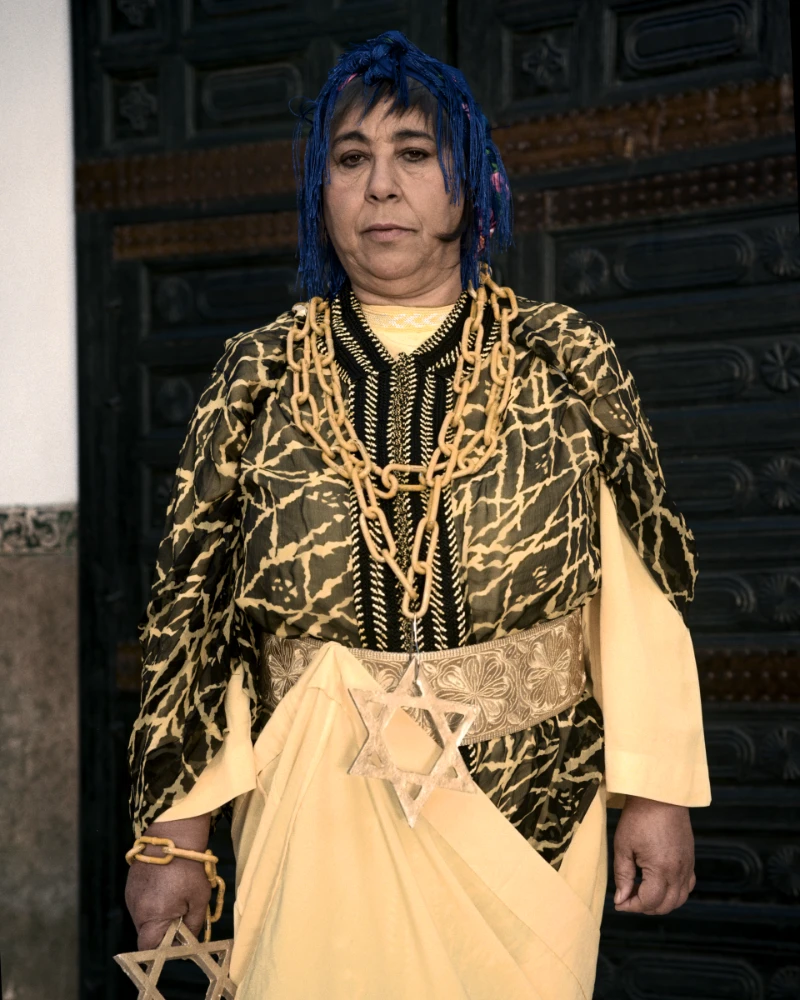
Alongside his writing and activism, Mustapha Ezzarghani has emerged as an uprising photographer with a highly distinctive visual language. His photography is not decorative; it is philosophical. At its core lies a sustained inquiry into Arab identity—its fractures, its silences, and its unresolved questions. The theme of Israel runs through his work not as provocation, but as a necessary and often avoided axis of reflection, illuminating deeper struggles around recognition, fear, coexistence, and moral responsibility.
His photographic style is restrained, symbolic, and deeply intentional. Through absence, shadow, and carefully constructed compositions, Mustapha invites the viewer into a space of contemplation rather than certainty. His images resist easy narratives, asking instead that identity be examined rather than declared. In this sense, his photography operates as a visual extension of his writing: disciplined, ethical, and uncompromisingly human.
Most importantly, Mustapha Ezzarghani represents a rare and coherent voice—a Moroccan Arab Muslim intellectual who bridges writing, peace advocacy, and photography with a singular moral vision. From Marrakech to the United States, his journey reflects a commitment to dialogue without erasure, identity without exclusion, and art that carries responsibility. His work positions him as a vital emerging figure for whom creativity is inseparable from conscience.